KolShalom
Sep 08, 2010  /  29 Elul 5770 Kol Shalom,   Rockville, MD    deb@kolshalom.com   301-493-8198
Who We Are Our Services Our Members Speak Our Programs Our Youth Jewish Links
Kol Shalom Homepage
home calendar donation Our New Home Join Us
Who We Are
About Kol Shalom
Rabbi Jonathan Z. Maltzman
CyberTorah Lesson 113
CyberTorah Lesson 3
Kol Ha-Rav May 2010
About Our Members
Our New Home
Staff and Leadership
Contact Us
Join Kol Shalom
Member inquiry Form
Donations
Newsletters

CyberTorah Lesson 3

 
Kol Shalom Cyber Torah
 
Lesson 3-October 23, 2006

TRACTATE AVOT, CHAPTER ONE, MISHNAH ONE (recap):

Moses received Torah from Sinai and passed it on to Joshua; Joshua to the elders, the elders to the prophets and the prophets passed it on to the Members of the Great Assembly. They said three things: Be moderate in judgement, Create many students, and Make a fence around the Torah.
EXPLANATIONS (continued):

It is clear that our mishnah wishes to present a certain conception of the development of the oral tradition. According to this conception, as I have already mentioned but needs repeating, from Sinai Moses received not only the Written Torah but also an oral explanation of how that Written Torah was to be put into effect. It is this Unwritten Torah, or Oral Torah, that is the subject of our mishnah. According to this conception there was an unbroken chain of tradition that started with Moses and continued through the biblical period and beyond, until we reach the "Members of the Great Assembly". This chain of tradition is given only in general terms, whereas from the time of the "Members of the Great Assembly" the human links in the chain of tradition are detailed one by one until the end of this chapter, and beyond.

While our present mishnah gives only a very general picture of the development of the oral tradition in its early stages (only two recipients are mentioned by name: Moses and Joshua), in the magnificent General Introduction to his magnum opus, Mishneh Torah, the Rambam (Maimonedes, an acronym for Moshe ben Maimon) details the supposed chain of tradition from Moses right through to the last sages of the Talmudic period. The list begins with Moses, Joshua, Pinchas, Eli, Samuel, David, Ahiyah, Elijah, Elisha, Yehoyada, Zechariah, Hoshea, Amos, Isaiah, Micah, Joel, Nahum, Habakuk, Zephaniah, Jeremiah, Baruch to Ezra. According to Rambam the rabbinical court over which Ezra presided was the "Great Assembly".

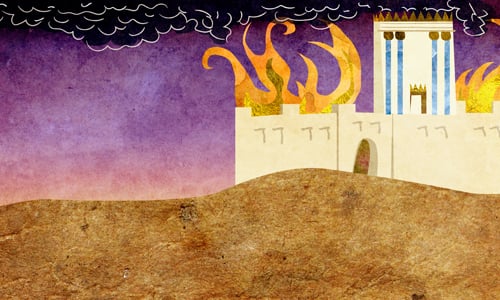
From an objective historical point of view this list is very problematic. The traditional date for the Exodus from Egypt is 1310 BCE. David conquered Jerusalem around the year 1000 BCE. The chronology given by the Rambam has only six recipients for this 300 year period - a 50 year tenure for each. This would be even further complicated by the fact that the traditional source itself says that Samuel was only 52 years old when he died and we know that David only reigned for 40 years. The other end of the list given above is no less unreliable. Zechariah was a prophet of the second Temple, not the first, and yet he is placed before Jeremiah who was active in the last years of the first Temple which was destroyed in the year 587/6 BCE. Ezra held his great Assembly in Jerusalem in the year 444 BCE - a span of 143 years to be covered by only two generations! The period immediately after Ezra is no less problematic. The Land of Israel was under Persian rule from 536 BCE until 333 BCE, and yet the Seder Olam gives this whole period only 52 years! However, from the year 333 BCE Seder Olam demonstrates a much more realistic appreciation of historical chronology.
Thus we must react rather indulgently at the certainty with which the Rambam gives the chain of transmission in the Biblical period. However, one point in time is extremely important, and that is the events that took place in Jerusalem under the aegis of Ezra and Nehemiah in the year 444 BCE.


Rabbi Jonathan Z. Maltzman
CyberTorah Lesson 113
Kol Ha-Rav May 2010

 
Affiliated with The United Synagogue of Conservative JudaismAffiliated with The United Synagogue of Conservative Judaism

Hosted with Jvillage Network